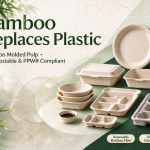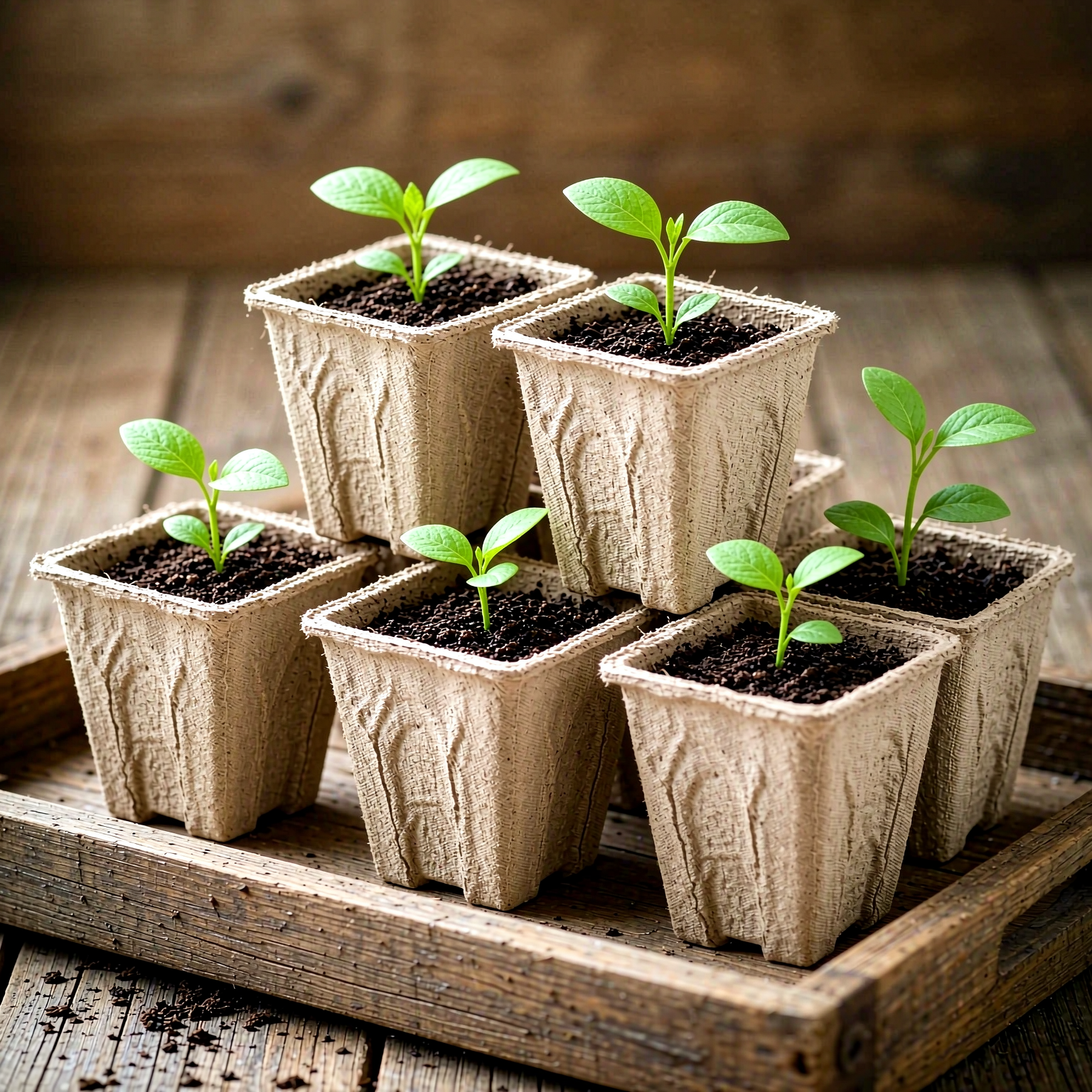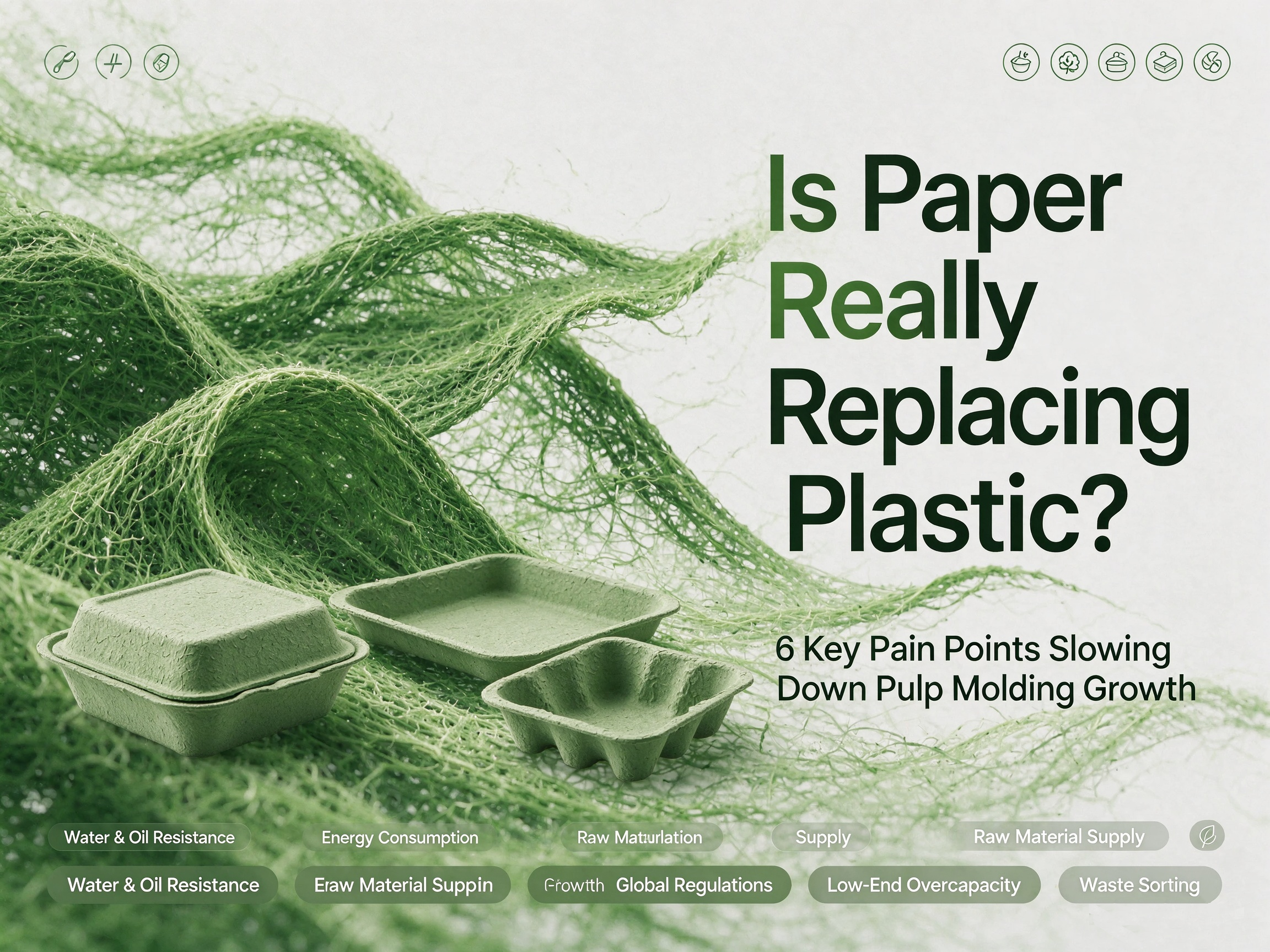
Amid the global plastic ban and carbon neutrality trend, pulp molding has become one of the most popular tracks for green packaging. From takeaway food containers and fresh food trays to inner packaging for cosmetics and precision 3C products, pulp molded items made from bagasse, bamboo pulp and recycled waste paper are rapidly replacing foam and plastic packaging.
Many investors regard it as a perfect plastic substitute because it is compostable and made from renewable raw materials. However, factory operators, foreign trade merchants and brand buyers have encountered a host of structural challenges after mass production and order landing. The market dividend is obvious, yet industry pain points are equally prominent.
1. Inherent Performance Limitations: Barrier Function, Humidity Resistance & Consistency
Natural fiber is porous and hydrophilic by nature — this is the fundamental contradiction of pulp molding.
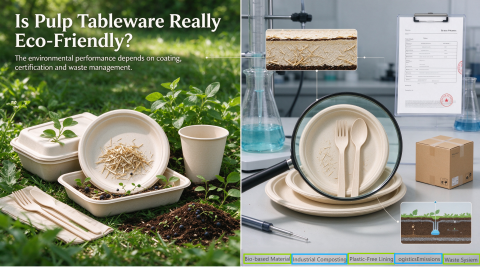
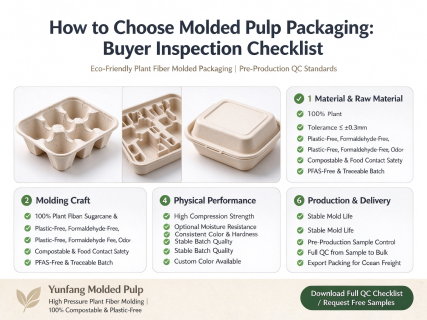
For a long time, fluorine-containing additives (PFAS) were widely used to achieve water and oil resistance with stable performance and reasonable cost. But with stricter regulations such as the EU PPWR and US state-level PFAS bans, fluorine-free performance has shifted from a selling point to a mandatory entry requirement for exports.
So far, there is no perfect fluorine-free coating solution. Many fluorine-free formulas struggle with weak oil resistance and soup leakage. Advanced coating processes raise production costs and may even compromise compostability, failing tests like EN13432.
Humidity is another major issue. Pulp molded products soften, deform and lose stiffness in high-humidity environments. For precision electronic inserts, cushioning performance drops sharply in humid storage, leading to failed drop tests. For hot food containers, softening and poor lid fitting hurt end-user experience.
Compared with plastic, pulp molding struggles with complex curved surfaces and thin-wall precision structures. Common defects include uneven wall thickness, burrs and color variation. High-end brands often face inconsistent quality between samples and bulk shipments, which is a key reason some brands revert to plastic packaging.
2. High Production Costs & Energy Consumption: Hard to Match Plastic Affordability
Contrary to common belief, pulp molding is not low-cost even with cheap fiber raw materials.
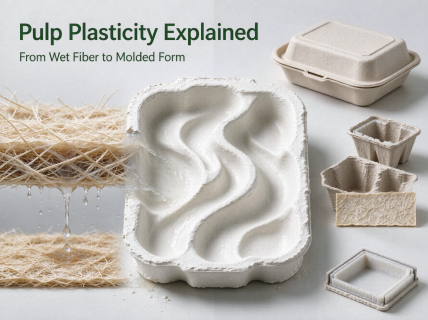
Wet pressing dominates high-end pulp molding for food containers and precision inserts, yet forming, hot pressing and drying consume massive energy. Steam, natural gas and electricity account for a large share of production expenses. Drying is the biggest bottleneck: slow moisture removal extends cycle time and increases line investment. Dry pressing runs faster with lower energy use, but delivers rough surface quality and is mostly limited to egg trays and cup carriers.
Raw material prices fluctuate frequently. Wood pulp follows international commodity prices. Bagasse and bamboo pulp are agricultural by-products with strong seasonality: sufficient supply and stable prices in harvest seasons, while tight supply and unstable quality in off-seasons. Recycled pulp is low-cost but not suitable for food contact, restricted to low-end cushion packaging. Raw material instability further increases quality control costs.
Together with expensive molds, labor and certification testing, pulp molded packaging is usually more expensive than plastic alternatives for the same function. Many brands support sustainability, but only a small number are willing to pay a continuous premium, slowing down substitution when price sensitivity rises.
3. Fragmented Raw Material & Process Routes, Lack of Unified Standards
Multiple raw material and process options coexist today: bagasse pulp, bamboo pulp, virgin wood pulp, recycled pulp, plus wet pressing, dry pressing, semi-wet pressing and direct wet pressing.
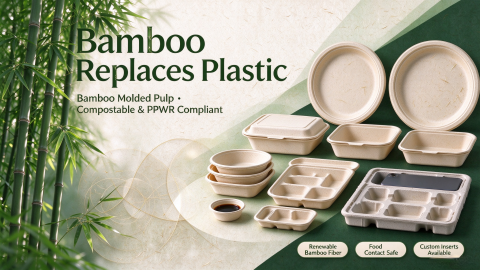
Each material and process fits different scenarios. Bagasse works well for tableware but has yellow tones and batch variation. Bamboo pulp is policy-supported, though its industrial chain is still under development. Recycled pulp is cheap but cannot touch food. Many new players blindly launch production lines without clear downstream positioning, only to find mismatched products and insufficient orders.
New processes such as direct wet pressing are heavily promoted, yet stable mass-production cases remain limited. Equipment, molds and process parameters require extensive trial and error. Most production know-how relies on experienced technicians instead of standardized procedures, creating a serious talent shortage.
4. Rising Compliance Pressure for Exports: Certifications, Tariffs & EPR Rules
Overseas sales are a core growth engine for Chinese pulp molding manufacturers, yet global regulations keep lifting market access thresholds.
PFAS restrictions, EU PPWR, compostability certifications (OK Compost, BPI), LCA carbon footprint reports and EPR obligations require heavy investment in time and testing fees. Many small factories can produce goods but lack complete compliance documents, losing overseas orders directly.
Anti-dumping duties in North America hang over exporters. Leading manufacturers build factories in Southeast Asia, Egypt and other regions to avoid tariffs, but overseas investment carries high capital risks alongside supply chain, labor and environmental challenges out of reach for most small mills. Domestic capacity floods alternative markets, triggering fierce price competition and squeezed profit margins.
5. Unbalanced Capacity Structure: Low-End Overcapacity, Insufficient High-End Supply
The industry shows a typical dumbbell-shaped structure. Low-barrier products such as ordinary egg trays and basic takeaway boxes attract countless new factories, leading to homogenization and brutal price wars with thin gross margins.
On the contrary, high-value segments including precision electronic inserts, medical packaging and premium airline tableware have few qualified suppliers that can deliver consistent quality and full compliance documents.
Many new projects rush into the market without demand research or raw material matching. When new capacity releases outpaces demand, overcapacity emerges. Small factories without stable raw materials, R&D capability or certifications compete only by cutting prices, dragging down the whole industry’s reputation.
6. Challenges in End-of-Life Disposal: “Compostable” Does Not Equal Easy Disposal
Pulp molding is marketed as compostable, yet supporting waste infrastructure is far from mature.
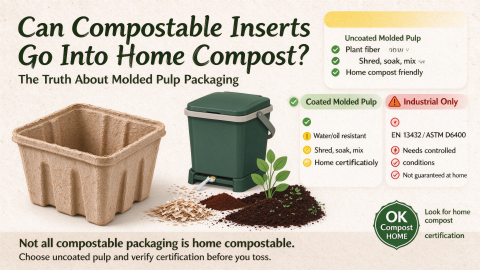
Industrial composting facilities are scarce in many regions. If mixed with general waste or plastic, pulp molded products cannot be sorted separately and often end up in landfills or incinerators, losing its environmental advantage. Some water/oil-resistant coatings may break compostability, bringing risks of greenwashing claims for brand customers.
Closing Thoughts
These pain points do not mean pulp molding has no future. Instead, they signal the industry is shifting from wild expansion to a new phase focused on technology, compliance and supply chain competitiveness.
Survivors will not rely merely on expanding capacity or undercutting prices. Winning players will invest in fluorine-free barrier formulas, heat pump drying and precision mold technology to cut costs and improve performance. Others will build global compliance systems, carbon footprint files and overseas production layouts to secure export orders. Many manufacturers will focus on niche high-value custom packaging for cosmetics, 3C and fresh food to avoid low-end red oceans.
“Paper replaces plastic” is a long-term trend, but material substitution is never simple. To truly replace plastic, pulp molding still needs continuous upgrades in material science, manufacturing processes, unified standards and waste recovery systems.