Short answer:
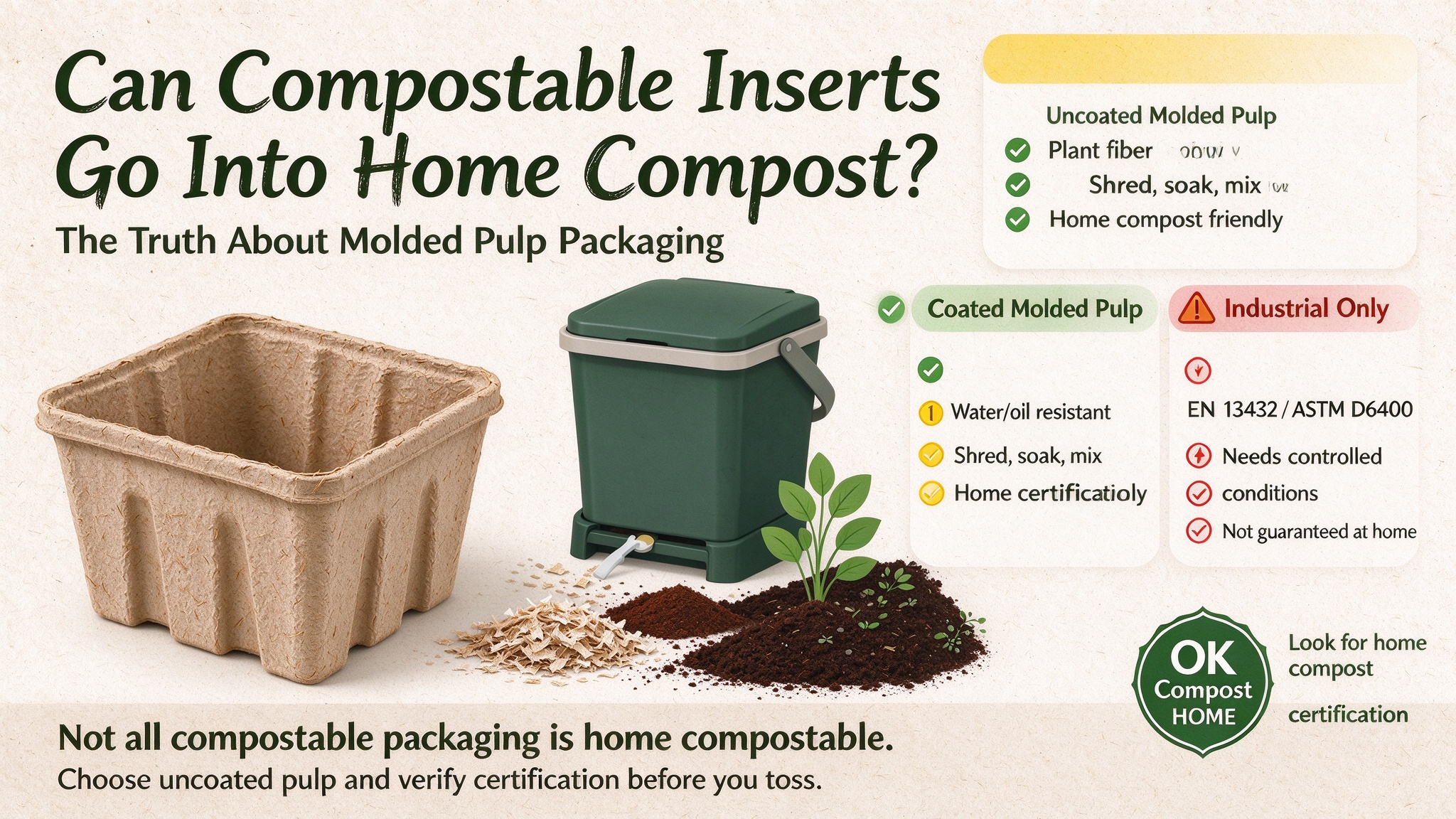
Uncoated, all-fiber molded pulp inserts — yes. They are among the better performers in a backyard pile, typically breaking down within 3–6 months.
But the word “compostable” on a box does not, by itself, prove it belongs in your garden heap. What actually decides it comes down to three things: coatings or laminates, the certification level, and wall thickness.
1. Three words that get used as one
| Term | What it means | Difficulty |
|---|---|---|
| Biodegradable | Breaks down eventually, in some environment. No time limit, no defined conditions. | Lowest — and the easiest to abuse |
| Compostable (industrial) | ≥90% biodegradation within 6 months at ~58°C in a managed facility | Medium |
| Home compostable | ≥90% biodegradation within 12 months at 20–30°C in an unmanaged heap | Highest |
The part that trips up most buyers: passing industrial compostability does not mean passing home compostability. The reverse does hold — a home-compostable material satisfies industrial conditions too. It is a one-way street.
2. Industrial vs. home: it’s not just temperature
| Industrial | Home | |
|---|---|---|
| Temperature | 58°C ±2, sustained thermophilic phase | 20–30°C, follows the weather |
| Management | Turned, moisture- and oxygen-controlled | Basically unmanaged |
| Biodegradation | 90% in 6 months | 90% in 12 months |
| Disintegration | 90% through a 2mm sieve in 12 weeks | 90% through a 2mm sieve in 6 months |
| Standards | EN 13432 (EU), ASTM D6400 / BPI (US) | OK compost HOME (TÜV Austria), NF T51-800 (FR), AS 5810 (AU) |
(Public technical requirements of the respective schemes; compiled from EN 13432, ASTM D6400 and TÜV Austria OK compost documentation.)
A material qualified only at 58°C has never been asked to work at 12°C. Put it in a winter heap and it can stay recognizable for a year. That is not a product failure — it is a material used outside the conditions it was tested in.
3. Why molded pulp starts ahead
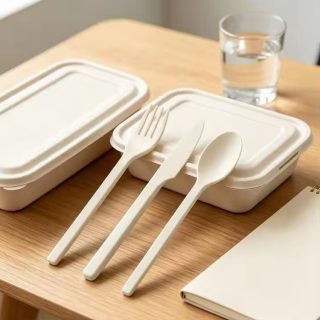
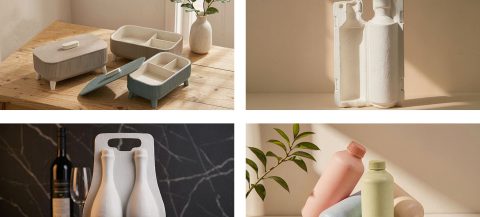
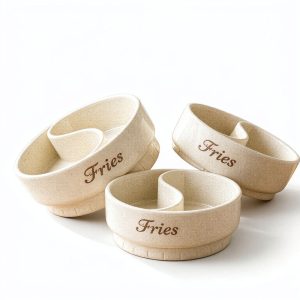
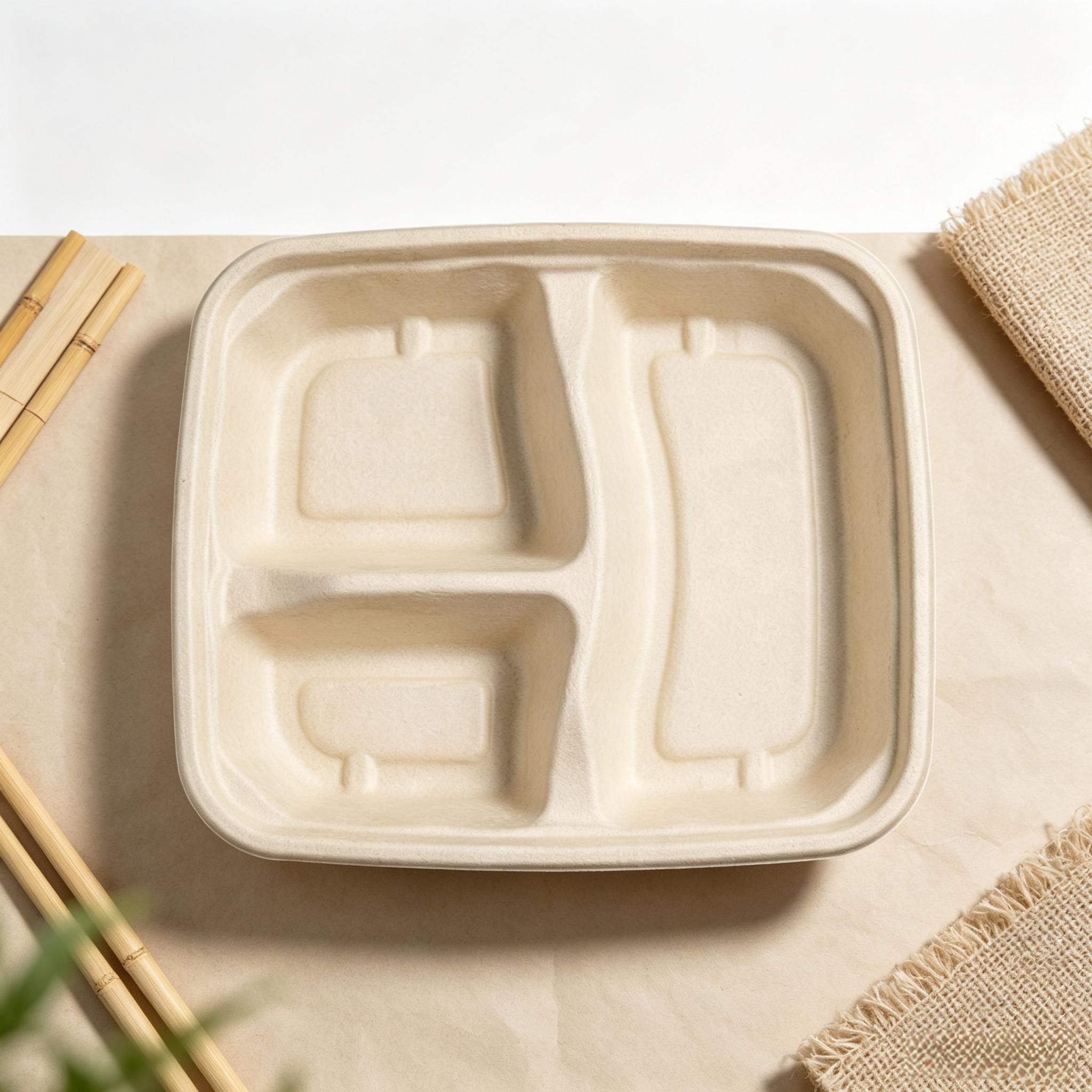
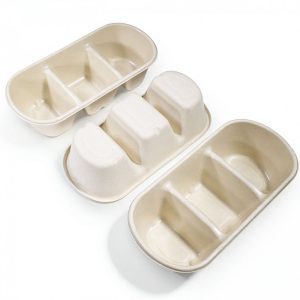
Molded pulp is plant fiber — bagasse, bamboo, wood pulp, reed, recycled paper. Its main component is cellulose, which microbes already know how to eat.
- EPS foam / EPE pearl cotton — fossil-based, not compostable
- Thermoformed PET / PP — a few compostable grades exist; ordinary grades do not
- PLA-lined paper — PLA needs ~58°C to start breaking down, so it essentially does not degrade in a home pile. This is the single most common thing people wrongly put in a backyard bin.
- Uncoated molded pulp — no plastic, degrades on its own, leaves no microplastics
There is also a quiet advantage: two end-of-life routes. A clean part goes to paper recycling. A food-soiled part, which would contaminate the recycling stream, goes to compost instead. Very few packaging materials offer both.
Publicly cited industry ranges for uncoated molded pulp: 30–90 days industrial, 3–6 months home. Treat these as reference ranges, not a promise for any specific part.
4. Three cases where “compostable” still won’t compost at home
① Water/grease-resistant coatings. Traditional treatments used PFAS chemistry. PFAS are effectively permanent in the environment and are being restricted in food-contact materials across multiple markets — PFAS-treated items should not go into a home pile. Bio-based alternatives (chitosan, shellac, plant waxes, starch-based, AKD/ASA) generally perform better, but they still slow degradation and vary widely by formulation. If there is a barrier treatment, ask for evidence — do not infer it from “it’s paper.”
② Laminates and composites. Pulp + PE film, pulp + foil, pulp bonded to non-woven: the moment it becomes a composite, it stops being a single material. The coating turns a mono-material part into a composite, killing both the recycling and the composting route. You get flakes of film left in the heap.
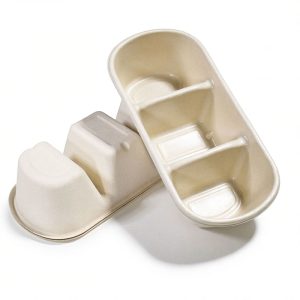
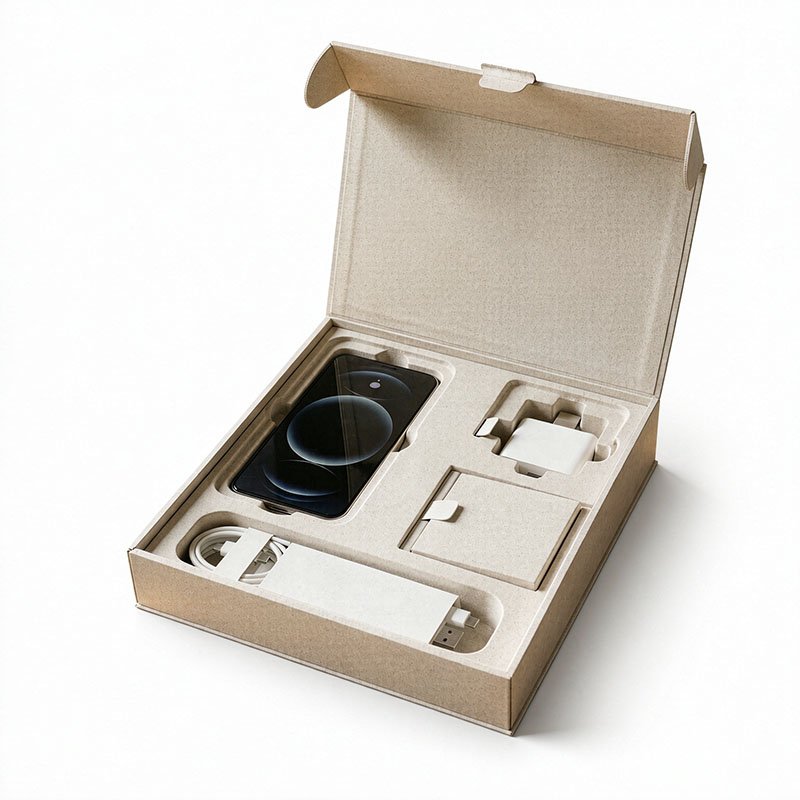
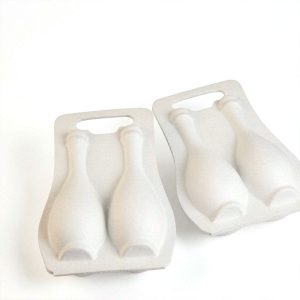
③ Thick-walled industrial inserts. Cushioning inserts run 3–5mm or thicker at higher density to carry load. Same fiber, thicker wall, slower breakdown — microbes eat from the surface inward. Thin-wall egg trays soften in weeks; heavy industrial inserts can sit through a winter and only darken.
5. A 4-step check before you put it in the pile
Step 1 — Look for a home-composting mark specifically. OK compost HOME (TÜV Austria), AS 5810, NF T51-800 = home grade. BPI, OK compost INDUSTRIAL, Seedling, DIN-Geprüft = industrial grade. BPI and Seedling are not home-composting certifications — this is the most common misread.
Step 2 — Ask the supplier three questions.
- Is the certificate for the finished product or just the raw material? A material-level certificate does not transfer — coatings, heat and additives change the outcome.
- What is the certificate number? Every certifying body issues one per manufacturer; you can verify it yourself. No number = treat as uncertified.
- Any PFAS / fluorinated compounds? Get it in writing, ideally with a total fluorine test report.
Step 3 — Run a 90-day test (costs almost nothing). Cut a 10×10cm sample, weigh and photograph it. Bury it 20–30cm inside an active pile, keep it moist. Check monthly. After 90 days it should be visibly soft, frayed at the edges, and crumble when rubbed. Still one solid piece? Not suitable for home conditions.
Step 4 — Match the certificate to where it actually goes. If the product ends up in municipal organics collection, industrial certification is enough and cheaper. Home-grade certification (longer lead time, higher cost) only pays off when the item genuinely goes home with a consumer.
6. How to make it break down faster
- Tear it up — surface area drives speed; palm-sized pieces beat a whole tray
- Soak it first — dry fiber steals moisture from the pile
- Bury it 20–30cm deep — the surface is cold and dries out
- Balance the carbon — fiber is high-C/N; pair with food scraps, coffee grounds, grass clippings. Target C/N 25–30:1, moisture like a wrung-out sponge
- Turn every 1–2 weeks — anaerobic piles smell and stall
- Don’t expect much in winter — cold microbes quit; fall material often visibly shrinks by spring
Rough timelines (industry reference ranges — verify with your own testing)
| Type | Home composting window |
|---|---|
| Thin-wall trays (egg trays, produce trays) | ~4–8 weeks |
| Medium-wall inserts (tableware, light cushioning) | ~2–4 months |
| Heavy industrial inserts (3–5mm) | ~3–6 months, sometimes longer |
| Coated / laminated | Depends on coating — do not home compost until proven |
7. FAQ
Does “100% biodegradable” mean home compostable? No. “Biodegradable” carries no time limit and no defined environment. Look for a specific compostability mark and certificate number.
Can I compost an insert that held raw meat or greasy food? Yes — grease is nitrogen, it helps. But do not put food-soiled fiber into paper recycling; it contaminates the pulp. Composting is the right route.
Is BPI certification enough for home composting? No. BPI follows ASTM D6400, an industrial standard (90% within 180 days at facility conditions). For home composting, look for OK compost HOME, AS 5810 or NF T51-800.
Are coated inserts always non-compostable at home? Not always. Some bio-based coatings pass, and formulations vary enormously. The answer must come from that specific finished product’s certification or your own test, not from a rule of thumb.
Industrial or home certification — which should I buy? Follow the waste stream. Food service and fresh-produce logistics going to municipal organics: industrial is fine. Retail goods that go home with the consumer: you need the home grade.
How long is a certificate valid? Most schemes issue for roughly three years with surveillance. Check the expiry date when you verify — an expired certificate is no certificate.
Why is my insert still in one piece after six months? Three likely causes, in order: too thick (microbes only reached the surface), too dry or too cold (microbes stalled), or it has a coating/laminate and never belonged in a home pile.