If you follow the pulp and paper industry, you’ve probably seen the same analysis repeated endlessly: pulp price fluctuations, port inventory data, and the gap between softwood and hardwood pulp.
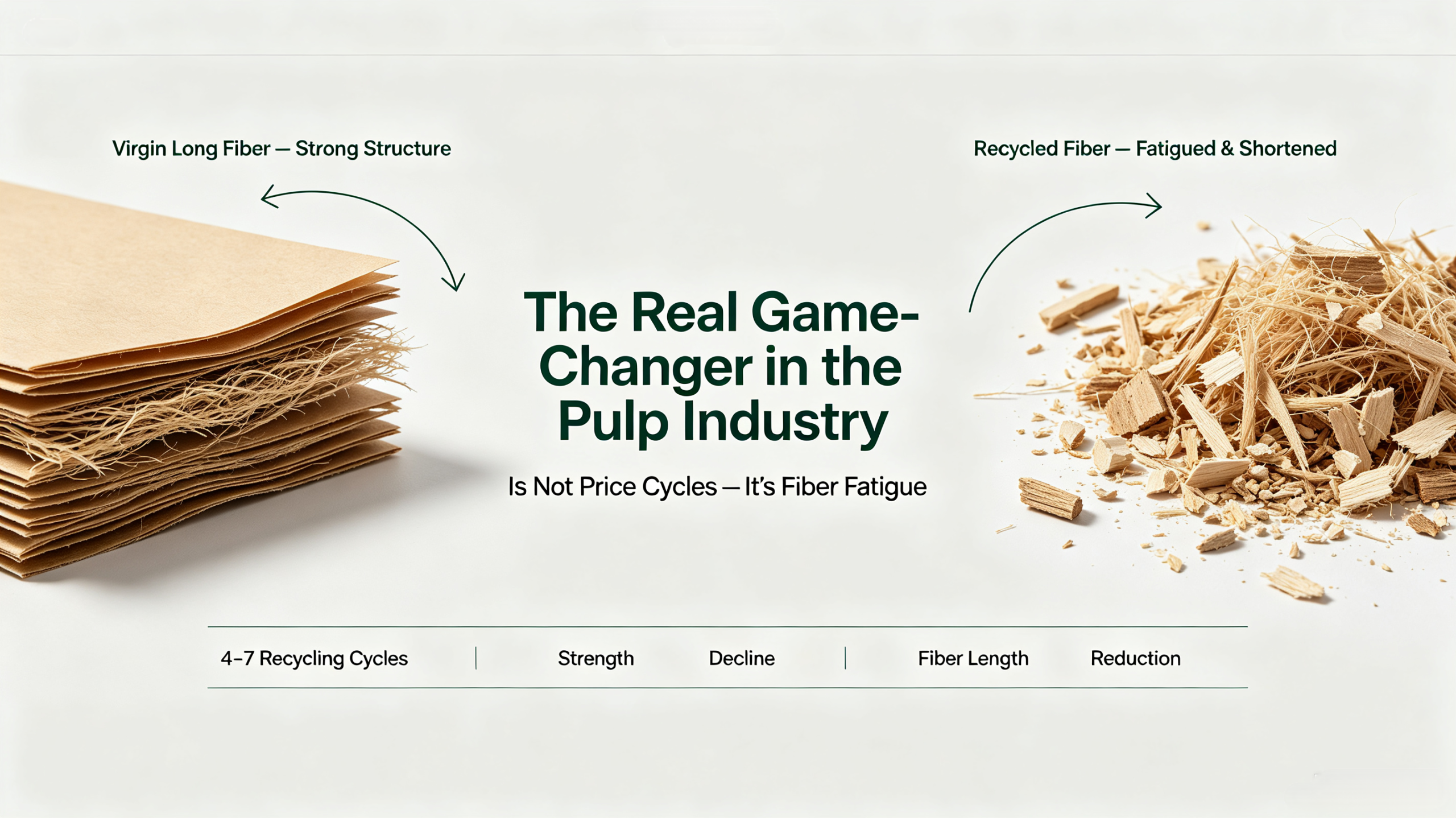
These short-term market trends dominate industry news, but they only reflect surface-level volatility. The real long-term rule reshaping the pulp industry is hidden in a tiny, easily ignored detail: fiber fatigue.
Every paper fiber has a lifespan. Unlike metal or plastic, paper fibers cannot be recycled infinitely. After 4 to 7 recycling cycles, repeated crushing, dewatering, and drying will continuously shorten fiber length, reduce toughness, and create more fine debris. At this point, no chemical additives can fully restore the original strength, fold resistance, and structural stability.
This is why many brands fall into an environmental misunderstanding. Many buyers simply chase higher recycled fiber ratios, believing that a higher recycled content equals better ESG performance and a lower carbon footprint. In practice, excessive reliance on over-recycled, fatigued fibers brings hidden losses.
Fatigued fibers cause packaging problems: linting, poor water resistance, and higher breakage rates during transportation. Damaged goods generate extra waste and reverse the original purpose of environmental protection. To compensate for weakened fiber strength, manufacturers have to increase paper basis weight, consuming more pulp and energy, which ultimately raises overall carbon emissions.
This does not mean recycled pulp is a burden. Recycled fiber remains the core foundation of the circular paper economy, with outstanding cost advantages for low-end packaging, egg trays, and ordinary buffer packaging. The future trend is not “zero recycled fiber” or “full recycled fiber”, but balanced fiber formula matching different application scenarios.
More and more mature pulp molding factories are adopting mixed fiber solutions: using long virgin softwood fibers to support structural strength and matched recycled short fibers to control costs. This balanced formula effectively avoids fiber fatigue defects and has become the fastest-growing technical direction in the domestic pulp industry in recent years.
Another silent industry change is the diversification of non-wood pulp. Bamboo pulp, bagasse pulp, and reed pulp are no longer just cheap substitutes for wood pulp. With fine surface texture and flexible toughness, these special fibers show unique advantages in disposable tableware and fresh food packaging. Although limited by seasonal supply and pretreatment costs, they are gradually becoming an important supplement to imported wood pulp, helping the industry reduce overseas supply chain risks.
Beyond fiber matching and raw material substitution, traditional pulp mills are also quietly transforming. In the past, by-products such as lignin were mostly burned as fuel. Now, leading enterprises are upgrading into biorefineries, extracting high-value lignin materials for new energy additives and industrial raw materials. In the next decade, pulp factories will no longer rely solely on pulp sales for profits.
Compared with fluctuating pulp prices and cyclical inventory data, fiber life cycle and fiber fatigue management are the real core competitiveness of the industry. In the future, low-cost single-formula pulp products will be eliminated, and customized fiber matching solutions will become the mainstream.
Final Thought Before pursuing a higher recycled ratio, we should first ask: How many times has this fiber been recycled? Does its fatigue degree match your product packaging and logistics scenarios?
Have you ever encountered unstable paper quality caused by fiber fatigue? Welcome to share your experience in the comments.