Food delivery, camping, fast-food dine-in, fresh food packaging — disposable tableware is everywhere in our daily lives. For a long time, lightweight and low-cost plastic tableware dominated the market. However, the resulting white pollution, soil residue, and food safety risks have pushed both the public and industries to seek better alternatives.
Among all eco-friendly tableware options, molded pulp tableware stands out with its durability, safety, low-carbon performance, and versatile adaptability. It has completely overturned the stereotype that “eco-friendly tableware is impractical” and become a mainstream choice for catering, fresh retail, and outdoor scenarios. It is undoubtedly one of the best solutions for today’s green consumption trend.
1. What Is Pulp Tableware? More Than Just “Paper Tableware”
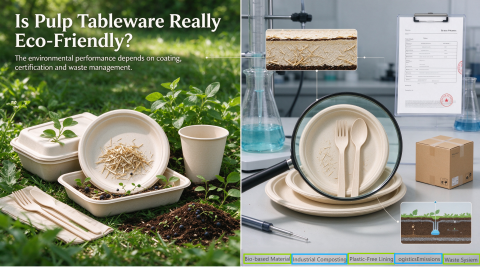
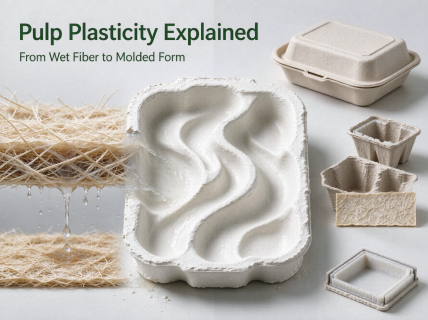
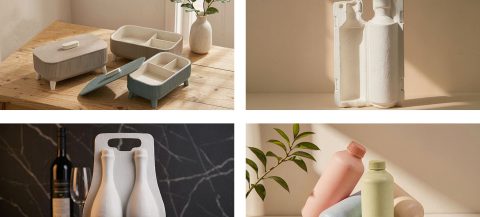
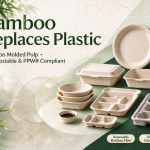
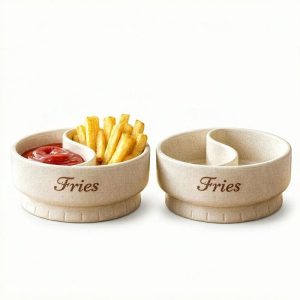
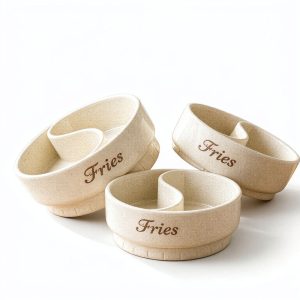
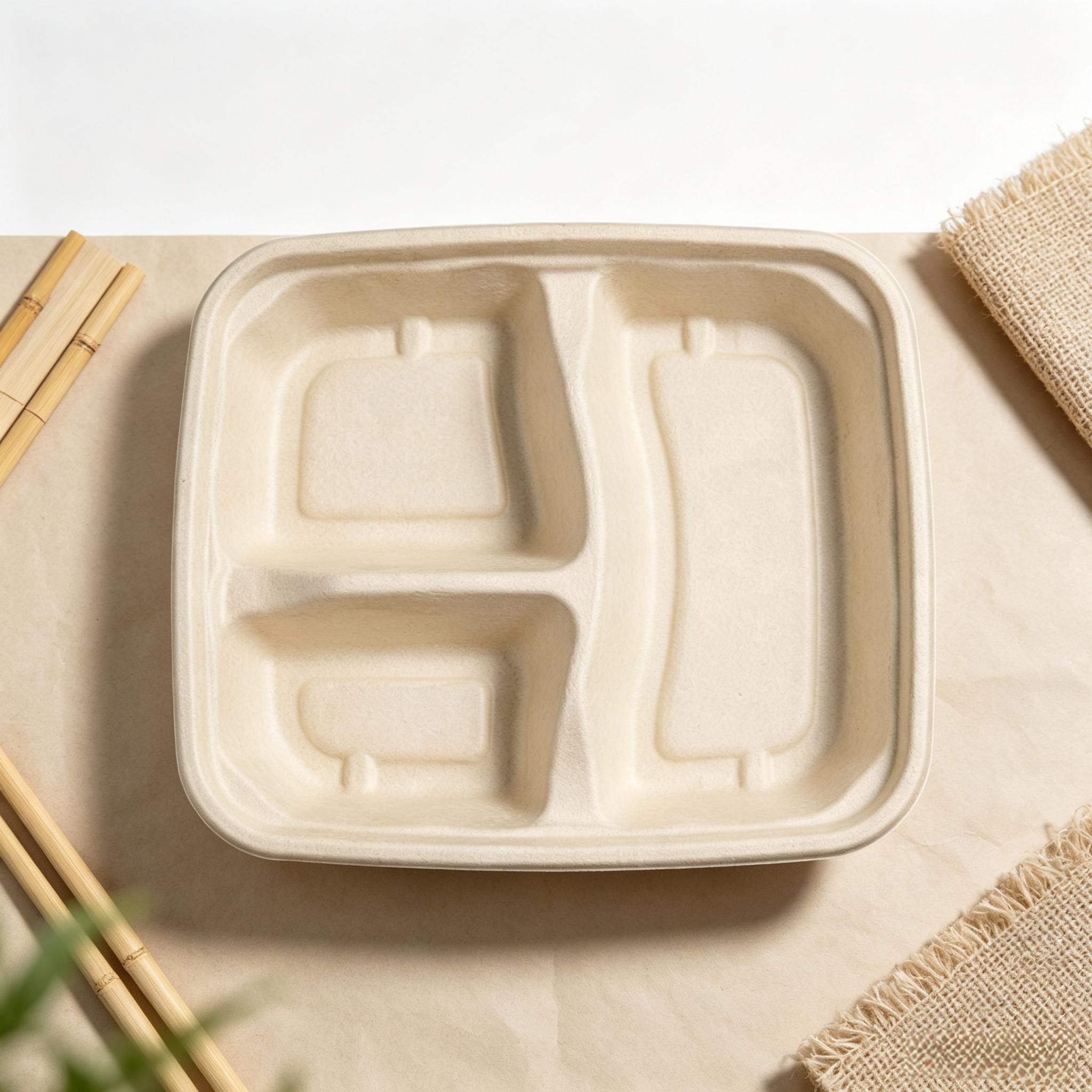
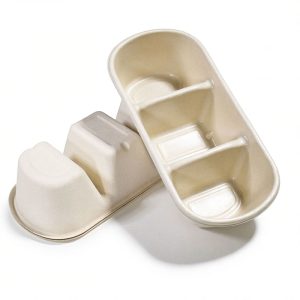
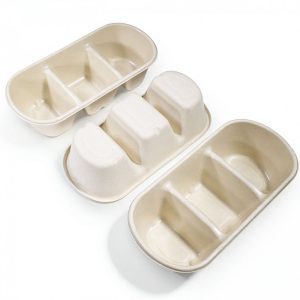
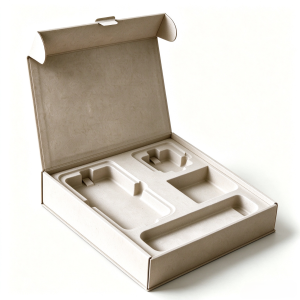
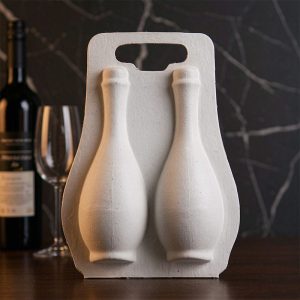
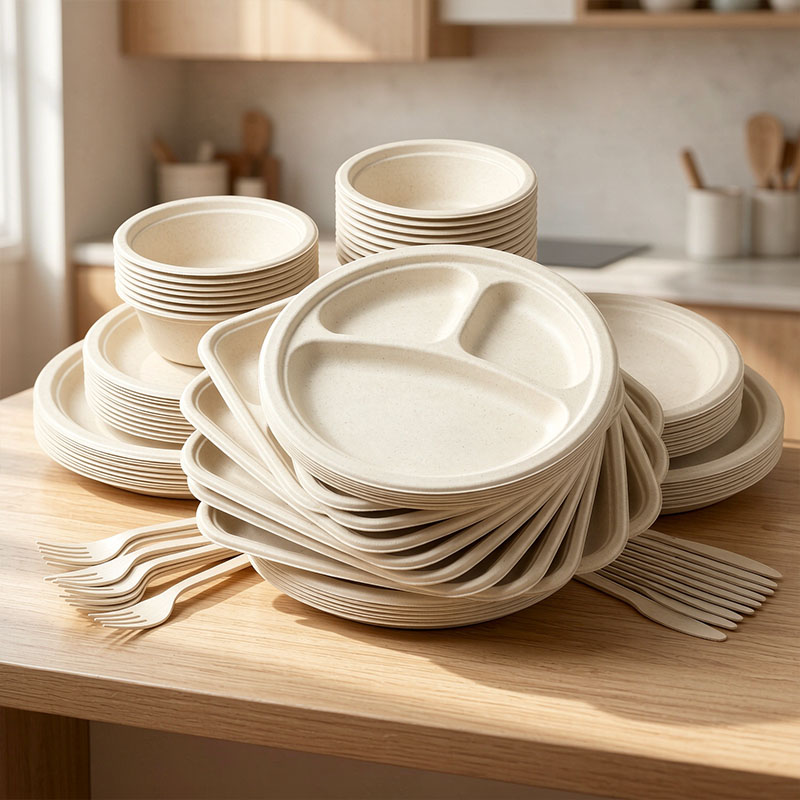
Many people confuse molded pulp tableware with ordinary paper tableware, but the two are vastly different. Made from natural plant fibers such as sugarcane bagasse, bamboo pulp, and crop straw, standard molded pulp tableware is produced through pulping, shaping, dehydration, high-temperature setting, and food-grade water and oil-resistant treatment. Common products include lunch boxes, bowls, plates, trays, and cutlery sets.
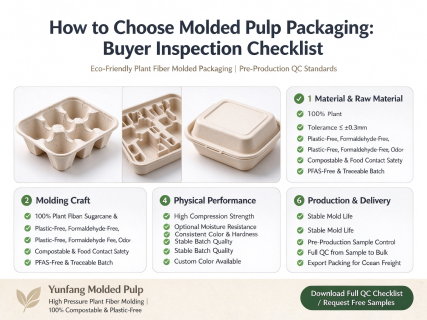
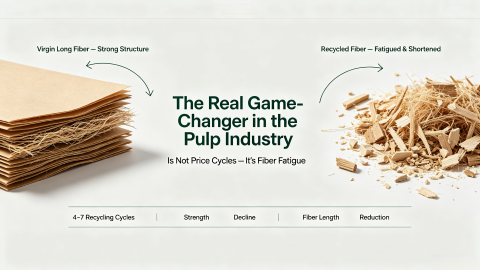
Unlike thin ordinary paper tableware, which is fragile, leak-prone, and heat-intolerant, molded pulp tableware features a dense structure and excellent stiffness. Optimized craftsmanship enables it to serve both hot and cold dishes as well as dry and wet ingredients, while eliminating the chemical hazards of traditional plastic tableware. Modern high-end pulp products adopt a fluorine-free formula with no per- and polyfluoroalkyl substances (PFAS), eliminating potential chemical residues and achieving true food-grade safety.
2. Core Advantages: How Pulp Tableware Outperforms Traditional Options
2.1 Low-Carbon & Biodegradable, Ending White Pollution
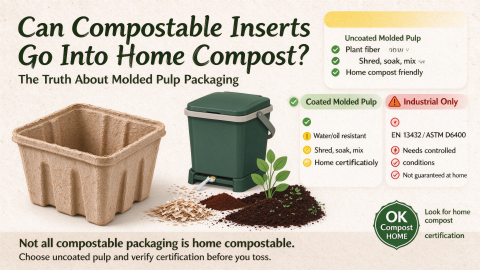
This is pulp tableware’s most competitive strength. Traditional plastic tableware takes hundreds of years to degrade, causing long-term pollution to soil and water ecosystems. In contrast, plant-fiber-based pulp tableware can be rapidly biodegraded in natural environments, eventually breaking down into carbon dioxide and water with zero residue and zero pollution.
According to authoritative industry data, the full-life-cycle carbon emission of one ton of pulp products is only 0.85 tons of CO₂ equivalent. Compared with foam plastic of the same functionality, it reduces carbon emissions by over 67%. It perfectly aligns with national carbon neutrality goals and serves as a key approach for catering enterprises to achieve ESG green upgrading.
2.2 High Temperature & Leakage Resistance with Excellent Practicality
People used to reject eco-friendly tableware for its poor usability — soft paper bowls with hot soup, oil-leaking boxes, and water-soaked deformed containers. New-generation molded pulp tableware completely solves these pain points. With high-temperature shaping and food-grade modification, it features high temperature resistance, low temperature resistance, water and oil repellency, and structural stability.
It works perfectly for boiling hot dishes and soups, as well as chilled fresh ingredients and frozen food. Its unique breathable and moisture-absorbing texture locks in food flavor while absorbing excess water vapor, effectively extending the shelf life of fresh produce and baked goods and reducing food waste. Its overall practicality far exceeds ordinary plastic and paper tableware.
2.3 Food-Grade Safety for Daily Catering Scenarios
Food safety is the bottom line of catering consumption. Low-quality traditional plastic tableware releases harmful substances under high temperatures, posing long-term health risks. Qualified molded pulp tableware is made of natural plant fibers and manufactured with full food-grade procedures. It is odorless, free of toxic additives, and stable under high heat, making it safe for both hot and cold food holding.
In particular, mainstream fluorine-free pulp technology avoids chemical residues caused by traditional oil-resistant treatments. It meets stringent standards for maternal and infant catering, light meals, airline catering, and other high-end scenarios, with safety verified by multiple authoritative tests.
2.4 Premium Texture for Diverse Scenarios
Compared with the cheap texture of plastic tableware, molded pulp tableware presents a natural plant grain, a minimalist appearance, and a gentle premium texture without complicated printing. It elevates the overall aesthetic for luxury camping, outdoor picnics, team gatherings, high-end light meals, bakery takeout, and fresh food gift packaging, helping catering brands build a green and upscale image.
3. Wide Applications: Where Pulp Tableware Is Used
With technological upgrades and cost optimization, pulp tableware is no longer limited to niche eco-friendly scenarios but has become a standard choice across daily life and industries:
- Catering Takeaway & Fast Food: Chain fast-food stores, light meal shops, and bakeries widely adopt pulp lunch boxes, bowls, and trays to replace traditional plastic packaging, solving oil leakage and deformation problems and improving user dining experience.
- Fresh Retail & Cold Chain Logistics: Pulp trays for fruits, vegetables, frozen food, and pre-made meals reduce transportation loss with low-temperature resistance, non-stick performance, and breathable fresh-keeping features.
- Outdoor & Leisure Scenarios: Ideal for camping, picnics, scenic spot catering, and night markets. Naturally degradable after use, it requires no complicated waste sorting, bringing convenience and environmental benefits.
- High-End Service Scenarios: Gradually adopted by airline catering, railway catering, business conferences, and hotel catering, replacing traditional disposable tableware with its safe, aesthetic, and low-carbon strengths.
4. Policy & Market Dual Drive: Pulp Tableware Is the Future Trend
The widespread popularity of pulp tableware is no coincidence, but a result of policy regulation, market demand growth, and upgraded consumer environmental awareness.
China’s plastic ban policy continues to tighten, restricting the use of non-degradable disposable plastic tableware and forcing the catering and packaging industries to pursue green transformation. Meanwhile, consumers are increasingly willing to pay for safe and low-carbon eco-friendly products, making green consumption a mainstream lifestyle.
Industry data shows that the market demand for pulp tableware in food service maintains double-digit growth. The penetration rate of high-end fluorine-free and compostable pulp products keeps rising, especially in high-value tracks such as airline meal boxes and fresh food trays. Major packaging enterprises are actively deploying molded pulp technology, optimizing processes and cutting costs to turn pulp tableware from a high-end eco-product into a mass-market necessity.
5. Future Outlook: Eco-Friendly Tableware Will Ultimately Replace Traditional Plastics
In the past, eco-friendly tableware was limited by high prices, poor performance, and insufficient choices. Today, technological iteration has enabled pulp tableware to achieve four core breakthroughs: safety, practicality, cost-effectiveness, and eco-friendliness. In the future, advanced bio-based material technology will further improve its cost performance and functional adaptability, while building a complete recycling and degradation closed-loop system.
In the long run, the phase-out of disposable plastic tableware is inevitable. Degradable eco-friendly tableware represented by molded pulp products will become the mainstream of the catering packaging industry, integrating low-carbon green concepts into every aspect of daily life.
Final Thoughts
Small tableware carries great environmental responsibility. The popularization of pulp tableware is not only an industrial material upgrade but also a green transformation of public lifestyle. It balances life convenience, food safety, and ecological sustainability, enabling people to practice low-carbon living without sacrificing comfort.
Every choice of pulp eco-friendly tableware contributes to ecological protection. In the near future, green degradable tableware will enter thousands of households, making low-carbon living a daily norm.